

Fuel Polishing
At OTS, we specialise in delivering professional fuel polishing services designed to restore and preserve fuel quality across industrial, commercial, and critical infrastructure sites. Our fuel polishing services ensure stored fuel remains clean, stable, and ready to use when it is needed most.
Understanding Fuel Polishing
Fuel polishing is the process of cleaning and treating stored fuel to remove microbial, sediment, and water contamination that can accumulate over time. These contaminants can cause significant harm to your fuel system, leading to equipment failure, costly repairs, and operational downtime. For more information, read our article on Diesel Bug here.
Why Fuel Polishing Matters
Fuel polishing helps to maintain the cleanliness and quality of your stored fuel in accordance with industry standards, including those outlined in the Worldwide Fuels Charter. Even minor contamination can compromise equipment reliability and system efficiency.
Professional fuel polishing services help to:
Restore fuel cleanliness and stability
Remove water and microbial contamination
Improve combustion efficiency and reduce emissions from contaminated fuel
Prevent injector wear and filter blockages
Reduce the risk of generator failure
Extend the lifespan of stored fuel
Support compliance and audit readiness
Key signs your fuel needs polishing
-
Sludge, microbial growth, or water contamination can clog fuel injectors and affect combustion efficiency.
-
Excess sediment, water, or microbial growth (Diesel Bug) can clog filters, restricting fuel flow and forcing engines to work harder. This is a strong indication that your stored fuel needs professional cleaning.
-
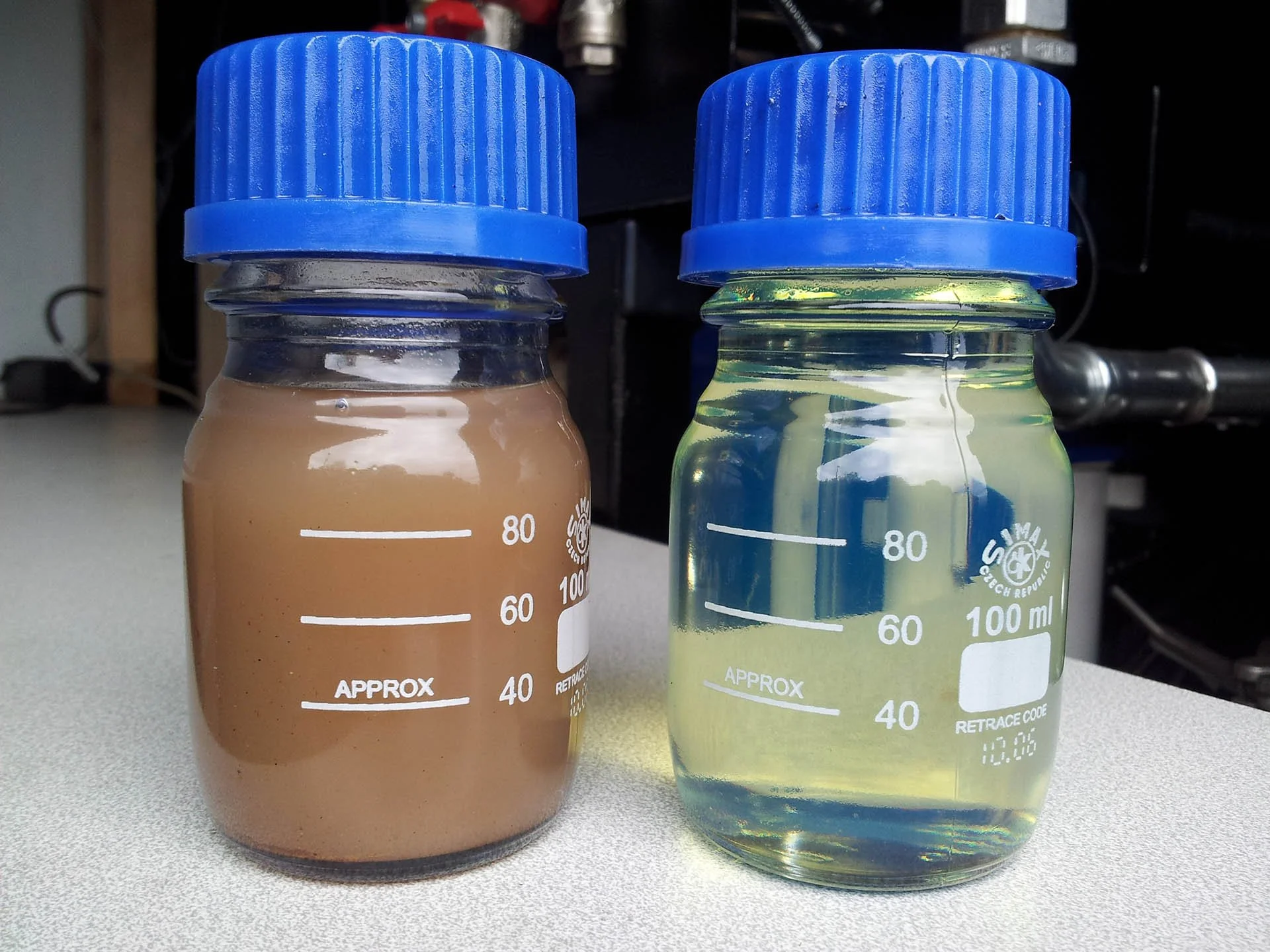
Healthy fuel should be clear and bright. If your stored fuel appears hazy, dark, or contains visible particles, it likely has a build-up of sediment, oxidation by-products, or microbial contamination.
-
Water contamination can occur due to condensation inside fuel tanks or poor storage conditions. Signs of water include separation in fuel samples or a milky/cloudy appearance. If left untreated, water encourages microbial growth, leading to sludge formation and corrosion in your tank.
-
Excessive black smoke or unburned fuel in the exhaust could indicate fuel degradation or contamination affecting combustion efficiency. Dirty fuel burns poorly, increasing emissions and harming engine performance.
-
If you notice sludge or thick deposits at the bottom of your tank, it’s time for a full fuel storage refresh (tank cleaning & fuel polishing). Sediment build-up can reduce fuel quality, clog filters, and damage equipment over time.
If you’ve noticed any of these warning signs, it’s essential to act quickly to prevent further damage to your fuel system.
Our Approach
We employ a meticulous approach, combining state-of-the-art equipment with time-tested techniques to deliver exceptional results. Here’s a step-by-step breakdown of our comprehensive fuel polishing process:
-
Before beginning, we take precise fuel samples from your storage tank to assess contamination levels. Our analysis covers:
Particulate Contamination: Identifies debris and particles that could clog fuel system components.
Microbial Contamination: Detects harmful microorganisms like diesel bug.
Water Content: Measures moisture levels to prevent corrosion and microbial growth.
FAME Levels: Assesses the percentage of Fatty Acid Methyl Esters in biodiesel blends, ensuring compliance with equipment manufacturer recommendations.
Sulphur Content: Verifies sulphur levels align with regulatory limits and environmental requirements.
Why It Matters: Accurate testing ensures a targeted approach to addressing contamination, saving time and resources while guaranteeing optimal results.
-
Using high-flow pumps and advanced multi-stage filtration systems, we circulate your fuel through specialised filters. This step removes contaminants such as:
Water: Extracted to prevent corrosion and microbial growth.
Particulates: Eliminated to avoid injector and fuel system blockages.
Microbial Contamination: Addressed to restore fuel integrity.
Our equipment operates at high efficiency, ensuring even large volumes of fuel are processed quickly and effectively.
-
Following filtration, we enhance fuel quality with conditioners and biocides to:
Kill residual microbes.
Stabilise the fuel, preventing degradation during storage.
Inhibit future contamination.
These steps align with the Worldwide Fuels Charter to ensure long-term fuel cleanliness and usability.
-
We conduct a visual inspection of your fuel tank to identify structural issues or contaminants (e.g., sludge or rust) that could impact the fuel. If necessary, we recommend or provide additional services such as tank cleaning to ensure optimal performance.
-
After polishing, we conduct rigorous tests to verify that your fuel meets or exceeds industry standards, including:
Particulate Contamination Levels (ISO 4406): Ensures fuel cleanliness.
Microbial Levels: Confirms eradication of harmful organisms.
Water Content: Ensures minimal moisture remains.
FAME and Sulphur Levels: Verifies compliance with environmental and operational requirements.
We provide detailed reports, giving you full confidence in the integrity of your fuel.
-
To help you maintain fuel quality long-term, we offer tailored maintenance plans, including regular fuel sampling, preventative treatments, and proactive tank inspections. These services help prevent contamination and costly disruptions.

Why Choose OTS for Fuel Polishing Services?
When it comes to fuel polishing, technical precision and operational understanding are essential. OTS delivers structured, compliant fuel polishing tailored to the specific storage conditions and fuel types used across industrial and commercial environments.
-
We utilise high-performance filtration systems and controlled circulation techniques to remove water, sediment, and microbial contamination effectively. Our approach is designed to restore fuel quality without unnecessary waste or disruption.
-
Our fuel polishing services support environmental compliance by reducing contamination risk, improving combustion efficiency, and maintaining fuel quality in line with recognised best practice. Documented service reporting helps demonstrate responsible fuel management during audits and regulatory review.
-
OTS can provide a full uplift and disposal service alongside our fuel polishing and fuel tank cleaning services.
Fuel Polishing Services FAQs
-
Fuel polishing can often be carried out with minimal disruption. Depending on tank configuration and system design, fuel can typically be polished in situ while maintaining operational capability.
-
In many cases, yes. Fuel polishing services can remove water, suspended particulates, and microbial contamination. However, if fuel has chemically degraded beyond recovery, OTS can provide safe fuel uplift and compliant disposal.
-
The frequency of fuel polishing depends on storage duration, fuel type, and operational risk. Backup generators and critical infrastructure sites often benefit from annual or biannual fuel polishing services to maintain fuel stability and readiness.
-
Yes. Biodiesel blends and HVO can still absorb water and develop microbial contamination during storage. Regular fuel polishing services help maintain stability, protect equipment, and reduce degradation risk.

Transform Your Fuel Quality with Professional Fuel Polishing Services
Take proactive steps to safeguard your fuel system and prevent costly disruptions. Schedule your fuel polishing service today and experience the peace of mind that comes with optimal fuel performance and compliance with industry standards.